
Adjusting to Motherhood & Identity Changes
in California
Online Therapy for
Adjusting to Motherhood in California
You love your baby. You just don't quite recognize yourself anymore.
You did everything to prepare. You read the books, set up the nursery, soaked up every piece of advice you could find. But nobody really told you what it would feel like to lose yourself in the process.
Maybe you feel like a mother first and a person second, and you're not sure when that happened.
Maybe you miss your old life…and then feel so guilty.
Maybe you don't know what you enjoy anymore, or what you even want.
Maybe you feel like everyone around you has adjusted fine, and you're the only one still trying to find your footing.
Maybe you love your baby fiercely and still grieve the version of yourself that existed before, and struggle to see how these things can coexist.
Many new mothers carry guilt for having these feelings. They tell themselves they should feel nothing but joy, fulfillment, or gratitude. But the reality is that becoming a parent often involves both profound love and profound change.
You can adore your child and still struggle with the transition into motherhood.
At Palmetto Psychology Clinic, we work with women navigating the profound identity shift that comes with new motherhood. You don't have to figure out who you are now all by yourself.
We've helped hundreds of California moms through this transition.
If this resonates, you’re not alone, and we can help.

What identity changes as a new mom actually look like
Becoming a mother isn't just a life event. It's a profound transformation. Just as adolescence describes the transition from childhood to adulthood, matrescence is the physical, emotional, psychological, relational, and identity shift that happens when we become mothers.
It can bring immense joy, but it can also leave you feeling unfamiliar to yourself. You might see yourself in some of these:
"I don't recognize myself anymore."
"I love my baby, but I miss the person I used to be."
"I feel like everyone else matters more than I do now."
"I don't know who I am outside of being 'Mom.'"
"I feel guilty whenever I do something just for myself."
"I'm constantly needed, and I never truly get a break."
"I don't feel like my old self—but I don't know who this new version of me is either."
"My career, friendships, marriage, and priorities all feel different now."
"I thought I'd feel more fulfilled, but mostly I just feel overwhelmed."
"I keep wondering if I'm doing enough, even though I'm giving everything I have."
Many mothers describe feeling like they've lost parts of themselves while trying to care for everyone else. They often find themselves grieving who they were while simultaneously trying to embrace who they're becoming.
These experiences are incredibly common, and you don't have to navigate them alone. Therapy can help you make sense of this transition, reconnect with yourself, and build an identity that includes motherhood…without being defined by it.
The Transition To Motherhood Can Feel Overwhelming
Motherhood is one of the most significant identity shifts a person can experience. Even when pregnancy was planned and welcomed, many women find themselves navigating emotions they didn't expect. You may notice:
Feeling disconnected from your former self
Loss of confidence or self-trust
Changes in your relationship with your partner
Feeling isolated or lonely
Difficulty balancing motherhood with other roles
Guilt about wanting time for yourself
Grieving your previous lifestyle
Feeling pressure to "do it all"
Increased anxiety or self-doubt
Questioning who you are outside of being a mother
These experiences are common, yet many women feel alone in them. Together, we help clients make sense of their experiences and move through this transition with greater confidence and self-understanding.

What Therapy Looks Like For New Motherhood And Identity Changes
Therapy for the identity shift of motherhood is not about convincing you to be more grateful or to "enjoy every moment."
At Palmetto, we help you grieve what's changed, reconnect with who you are, and build a sense of self that includes but isn't only being a mother.
In therapy, we may work on:
Processing the grief and loss that can come with becoming a mom
Untangling guilt from legitimate needs and desires (you're allowed to have both!)
Rebuilding a sense of identity, purpose, and personhood outside of your role as mom
Reconnecting with things that bring you joy, meaning, or rest
Working through resentment, comparison, or feelings of isolation
Strengthening your relationship with your partner and friends as you adjust
Learning to hold the hard feelings and the love at the same time
Finding your footing in a life that looks completely different than it did before
Our approach is compassionate, collaborative, and tailored to where you are. We know how strange it can feel to say out loud that motherhood is hard when you also love your baby deeply, and we hold both truths with you.
At the end of therapy, our clients often tell us they feel like themselves again…not the same self as before, but a fuller, more grounded version of who they're becoming.
FAQs about New Motherhood and Identity Changes
-
Completely, and more women feel this way than you'd ever know from the outside.
Becoming a mother is one of the most significant identity shifts a person can go through. Feeling lost in it doesn't mean you're doing it wrong.
We work with women navigating exactly this every day, and things do get clearer with support.
-
Resentment in new motherhood is incredibly common, especially when the division of labor shifts in ways that feel invisible or unacknowledged.
It doesn't mean your relationship is broken. It usually means something important needs to be named and addressed. We can help you work through this, individually or as a couple.
-
Challenges with the identity changes that accompany new motherhood and postpartum depression can overlap, but they're not the same thing.
PPD involves persistent low mood, numbness, or hopelessness. Identity shifts are more about confusion, grief, and disconnection from your sense of self.
Both are real and both are worth addressing, and a therapist can help you understand what you're experiencing.
-
Not even a little. Grieving your old life and loving your new one are not mutually exclusive.
Both can be true at the same time. The guilt you feel about missing your old self is actually a sign of how much you care, and therapy can help you hold both without the shame.
-
Absolutely. When you're in survival mode (e.g. running on little sleep, meeting everyone else's needs, etc.), it's hard to hear your own voice.
Many women emerge from early motherhood genuinely unsure of who they are outside of their role as “mom.” Therapy helps you reconnect with yourself on the other side of that fog.
-
No! Therapy is for anyone who wants support navigating something hard, and the identity shift of new motherhood absolutely qualifies.
You don't have to be in crisis to deserve a space to process this. Book a free consultation to see if we could be a good fit.
FAQs about Therapy at Palmetto
-
Therapy at Palmetto is a collaborative, supportive process.
Whether you’re seeking help for postpartum anxiety, depression, or challenges in motherhood, we’ll start by getting to know you — your story, your goals, and what feels most important to you right now — to create a therapy plan tailored to your specific circumstances.
Over time, therapy will help you feel calmer, more grounded, and more connected to yourself and those around you.
For more about our approach, visit our services page.
-
Finding the right therapist is key to feeling supported and understood. That’s why we start with a free consultation to learn more about what you’re looking for and match you with a clinician who specializes in your specific concerns.
If it’s not the perfect fit, we’ll help connect you with someone who is.
-
Yes! We exclusively offer telehealth sessions for clients throughout California.
Many clients, especially new and expecting moms, appreciate the flexibility of virtual sessions. Telehealth allows you to access care from the comfort of your home (and with your baby in your arms!) at a time that works for your ever-changing schedule.
-
Yes! We love seeing your little ones and you are welcome to cuddle, nurse, or contact nap with them during your sessions.
To maintain your privacy and to ensure you get the most out of therapy, verbal toddlers and older children should not be in the room with you during therapy.
-
Our session fees vary depending on the clinician, type, and length of service.
Fees reflect the expertise of our highly specialized doctoral-level psychologists. Rates fall within the typical range for private practice therapy in the Bay Area.
We also offer lower-fee services with our highly trained student therapists.
We’re happy to discuss your needs and share more about costs during your free consultation.
-
We are an out-of-network therapy practice, which means we do not bill insurance directly.
Many of our clients receive partial reimbursement from their insurance company for therapy sessions. We provide monthly superbills to make the process simple.
We recommend checking with your insurance provider about your out-of-network mental health benefits.
Standard Notice: “Right to Receive a Good Faith Estimate of Expected Charges” Under the No Surprises Act
You have the right to receive a “Good Faith Estimate” explaining how much your medical care will cost.
For more information visit CMS.gov. -
It’s a little different from client to client depending on needs, scheduling, and budget. We generally recommend that all clients start with us on a weekly basis.
After making some initial progress, some clients will move to a biweekly cadence. As you approach graduation from therapy, you and your provider may elect to space sessions out to meet monthly or on an as-needed basis.
You and your provider will work together to create a custom treatment plan tailored to your goals and needs.
-
It depends on your goals. Some clients come for short-term therapy to manage postpartum adjustment or anxiety, while others continue longer-term to work through patterns that have built up over time and to cope with the ever-changing challenges of motherhood.
You and your therapist will collaborate to find a pace and approach that feels right for you and regularly check in about your progress.
-
That’s completely normal. Many clients start therapy uncertain about what they need — they just know something isn’t working.
You don’t need to have the perfect words or plan to begin. Our therapists are here to meet you where you are and help you find clarity, confidence, and relief.
If you’re unsure, book a free consultation so we can make recommendations and help you decide whether therapy is the right fit — no strings attached.
-
We offer a free consultation to help you explore whether therapy at Palmetto Psychology Clinic feels like the right fit.
You can schedule directly through our website, email us at hello@palmettopsychology.com, call us, or send us a text at (628) 285-1745 — we’ll take care of the rest.
Ready to move forward?
Schedule a free consultation!
Our Team
-
![]()
Julia Birt, Psy.D.
Co-founder
-
![]()
Caroline Dickens, Psy.D.
Co-founder
-
![]()
Kayla Jimenez, Psy.D.
Co-founder
-
![]()
Megan Turner-Cabrera, Psy.D.
Licensed clinical psychologist
-
![]()
Joanna Chen, Ph.D.
Licensed clinical psychologist
-
![]()
Kelly Showen, Psy.D.
Licensed clinical psychologist
-
![]()
Meghan Goulet, Psy.D.
Licensed clinical psychologist
-
![]()
Meghan Brown
Student therapist
-
![]()
Kaety Kohlhorst
Student therapist
-
![]()
Khyati Talwar
Student therapist
-
![]()
Anni Liu
Clinic assistant







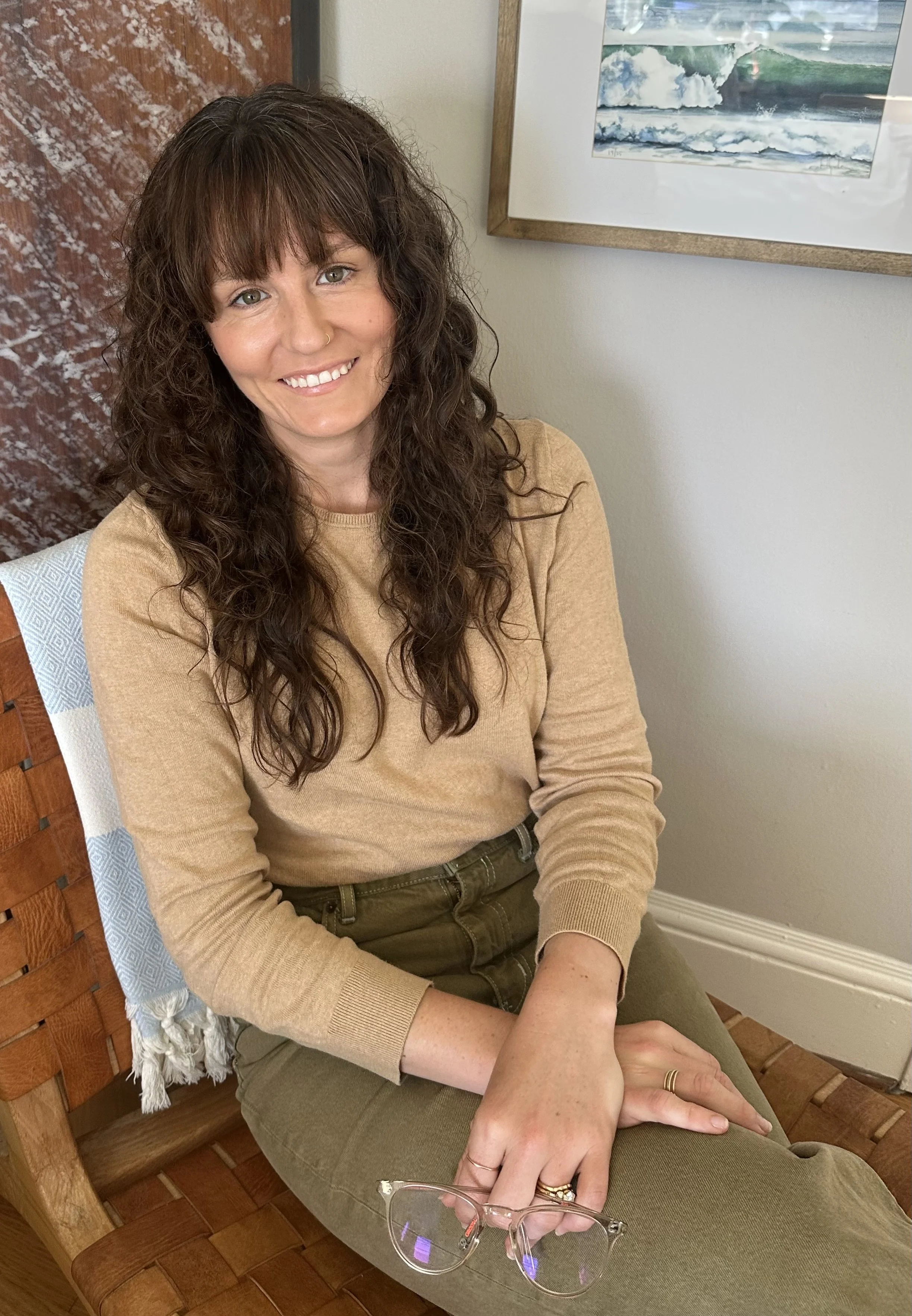



You don't have to keep losing yourself in motherhood.
If you're exhausted from feeling invisible, if you can't remember the last time you felt like yourself, or if the guilt of struggling is stealing your ability to enjoy this season of life - you are not alone.
We offer online postpartum anxiety therapy across California, including San Francisco, the Bay Area, Los Angeles, Orange County, and San Diego.
You don't have to wait until you're falling apart to ask for help.
Start with a free consultation to find the right therapist for you.